Most dog owners pay attention to food, exercise, and grooming. However, many forget one of the most important health routines — brushing their dog’s teeth. Just like humans, dogs develop plaque, tartar, and gum disease. Without regular cleaning, bacteria affect not only the mouth but also the heart, kidneys, and liver.
So, how often should you brush your dog’s teeth? The short answer: daily is best. Still, understanding why and how matters even more. At Belton Animal Clinic & Exotic Care Center, we often see preventable dental disease simply because owners didn’t know what signs to watch for or how quickly problems develop. This guide will help pet owners in Belton, MO, understand the importance of routine dental care.
Why Brushing Your Dog’s Teeth Is Essential
A dog’s mouth contains bacteria at all times. After eating, food particles stick to the teeth and gums. Then plaque forms within hours. If you leave plaque alone, it hardens into tartar in about 24–72 hours.
Consequently, tartar irritates the gums and causes inflammation. This condition, called gingivitis, leads to:
- Red gums
- Bleeding around the teeth
- Bad breath
- Pain while chewing
Eventually, the infection spreads deeper into the jawbone and tooth roots. Therefore, brushing your dog’s teeth regularly prevents disease before it starts.
How Often Should You Brush Your Dog’s Teeth?
Daily Brushing (Ideal)
Daily brushing removes plaque before it becomes tartar. As a result, your dog’s gums stay healthy, and its breath stays fresher. In fact, daily brushing is the single most effective home method of pet dental care.
3–4 Times Per Week (Acceptable)
If daily brushing isn’t possible, aim for at least three to four times weekly. While not perfect, this schedule still significantly reduces bacteria buildup in the mouth and along the gumline.
Once Per Week (Minimum)
Weekly brushing helps somewhat, but plaque still hardens quickly. Therefore, dogs brushed only once weekly often still need professional dental cleanings sooner.
Signs Your Dog Already Has Dental Problems
Sometimes owners don’t notice issues because dogs hide pain well. Watch closely for these symptoms:
- Persistent bad breath
- Yellow or brown tartar on teeth
- Drooling more than usual
- Swollen or bleeding gums
- Pawing at the mouth or face
- Difficulty chewing food
- Loose teeth
Additionally, behavioral changes such as irritability or decreased appetite often signal oral discomfort.
What Happens If You Don’t Brush?
Dental disease does more than affect the mouth. Bacteria travel through the bloodstream from infected gums. Consequently, infection can damage vital organs.
Health problems linked to poor oral hygiene include:
- Heart valve infection
- Kidney disease
- Liver complications
- Chronic inflammation
- Jawbone deterioration
Therefore, brushing your dog’s teeth protects the entire body, not just the mouth.
Step-by-Step: How to Brush Your Dog’s Teeth
Many owners assume dogs won’t tolerate brushing. However, with patience and consistency, most dogs adapt quickly.
Step 1: Choose the Right Tools
Always use:
- Dog-safe toothpaste (never human toothpaste)
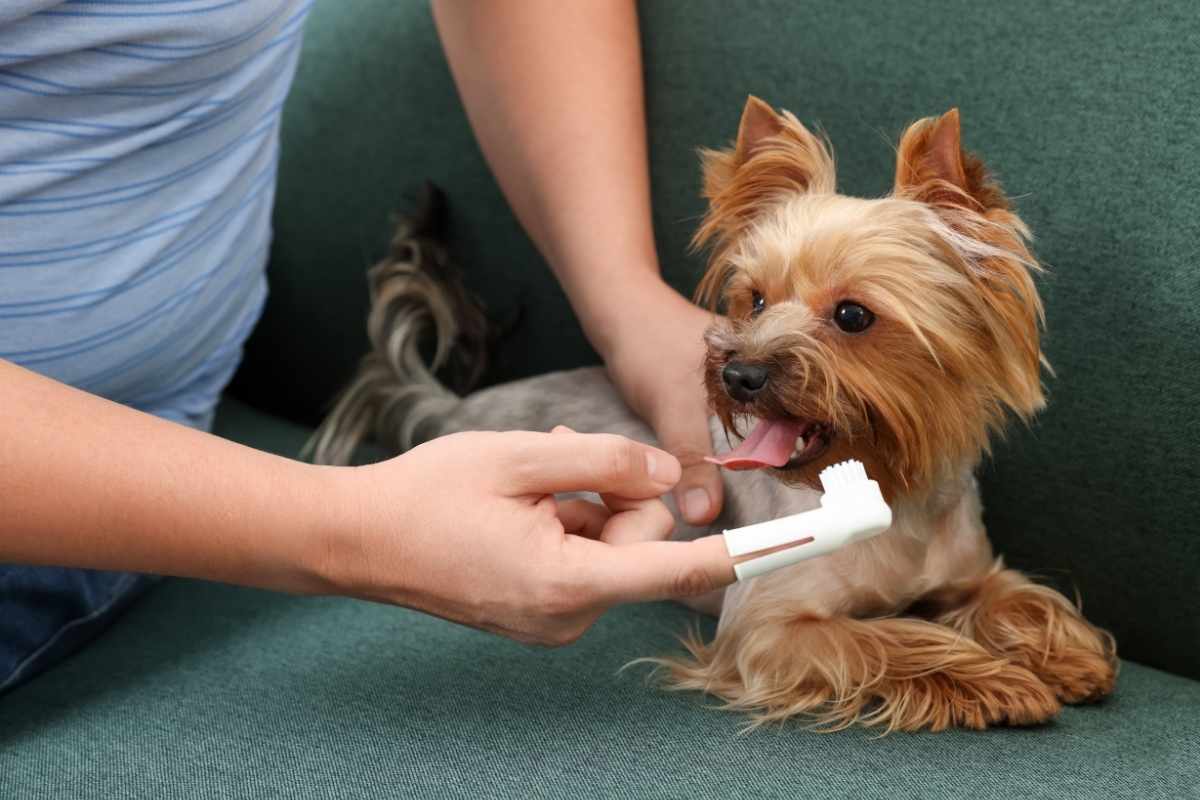
- Soft-bristled pet toothbrush or finger brush
Human toothpaste contains fluoride and xylitol, which can harm dogs.
Step 2: Introduce Slowly
First, let your dog taste the toothpaste. Next, gently rub the gums and lips with your finger. This builds trust and reduces anxiety.
Step 3: Begin Brushing
Lift the lip and brush gently in circular motions along the gumline. Focus on the outer surfaces of teeth because plaque accumulates there first.
Step 4: Keep Sessions Short
Start with 30 seconds. Then gradually increase to two minutes.
Step 5: Reward Immediately
Praise and reward your dog after brushing. Positive reinforcement creates cooperation.
Helpful Add-Ons (But Not Replacements)
Although brushing remains the most effective method, additional tools help maintain oral health.
- Dental chews
- Water additives
- Oral rinses
- Dental diets
- Chew toys that massage gums
However, these support brushing — they do not replace it.
Professional Cleanings Still Matter
Even with excellent home care, dogs still need veterinary cleanings. Professional scaling removes tartar under the gumline where brushing cannot reach.
Your veterinarian examines:
- Teeth roots
- Jawbone
- Gum pockets
- Tongue and soft tissues
Early detection prevents tooth loss and chronic pain.
When to Start Brushing
Start brushing during puppyhood if possible. Puppies learn routines quickly and accept mouth handling. Nevertheless, adult dogs can learn too. Consistency matters more than age.
Meanwhile, small breeds especially need dental attention. Because their teeth are crowded, plaque forms faster.
Tips to Make Brushing Easier
- Brush at the same time daily
- Choose a calm environment
- Stay relaxed
- Avoid forcing the mouth open
- Gradually increase brushing time
Soon, your dog will view brushing as a normal routine instead of a stressful event.
Regular dental care keeps your dog comfortable, active, and healthy. Brushing protects the teeth, gums, jaw, and even internal organs from harmful bacteria. Most importantly, a simple daily habit prevents painful infections and expensive treatments later.
If you are in Belton, MO, and searching for a trusted veterinarian near you, schedule a dental checkup with Belton Animal Clinic & Exotic Care Center and give your dog a healthier smile and a happier life.
Frequently Asked Questions
Q1. Can I use human toothpaste?
Ans. No. Human toothpaste can upset your dog’s stomach and may contain toxic ingredients.
Q2. How long should brushing take?
Ans. Two minutes is ideal, but even one minute daily provides benefits.
Q3. Do puppies need dental care?
Ans. Yes. Starting early prevents future disease and helps puppies accept handling.
Q4. Are dental treats enough?
Ans. No. Treats help reduce plaque, but they cannot clean along the gumline like brushing.
Q5. What if my dog refuses brushing?
Ans. Introduce brushing slowly. Use flavored toothpaste and reward cooperation.
Q6. How often are professional cleanings needed?
Ans. Most dogs need cleanings every 1–2 years, though some breeds require them more often.